Concordia captain and Knox: victims of Italy's blame culture

The Italian way is to blame and shame - but that's not how to investigate an accident

Column LAST UPDATED AT 13:19 ON Tue 17 Jan 2012
Bywater

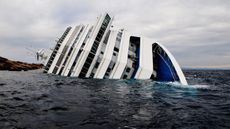
CAPTAIN SCHETTINO is a hell of a skipper. He followed the Costa Concordia’s laid-down route but diverted from it to hit a rock which was clearly marked but wasn’t marked at all. He was on the bridge while simultaneously in the dining room flirting and in the bar drinking. He was cancelling alarms which didn’t go off while on deck saluting the island of Giglio, or possibly a colleague’s wife, or pointing it out to a crewman who lived there.

He radioed the coastguard immediately after the collision to say the ship was taking on water, while simultaneously not radioing them at all until half an hour afterwards, or possibly next September.

He was first and last off the ship. He supervised the evacuation (as one crew member wrote on the Facebook page set up in support of Capt Schettino, “We evacuated four thousand people from a ship, on its side, in the dark. This says we are not incompetent”) but didn’t supervise it at all.

In short, many of the reports are speculative rubbish.

Disasters in Italy are a journo’s dream. Press and the Italian justice system have the same approach: speak first, think later. Think of Amanda Knox. Think of Silvio Berlusconi wriggling off the hook again and again. Think of the Costa Concordia and Captain Schettino.

The Italian system has two main objectives: blame, and punish. All very well if you have the mind-set of a primary-school playground, but if in homage to the dead and the 28 people reportedly still missing today you want to find out what went wrong and why, so that you can prevent anything similar happening again, blaming and punishing are the last two things to do.

For some years, I taught people how to investigate incidents - anything from a sinking ship to a sprained ankle, an explosion to a wildly-swinging crane. We had one rule: nobody was allowed to use the word “blame”. The Italian justice system uses no other. Their investigations aren’t led by an investigator, but a “prosecutor”, all too often a puffed-up blabbermouth. By the time a case gets to court in Italy, the idea of objective judgment is an absurdity.  Whether or not prosecutor Francesco Verusio is “sure enough” of the things he was sure enough about, after just a day on the case, the waters are already irrevocably stained with the muddy silt of tittle-tattle.

No way to conduct an investigation. Richard Davenport-Hines’s new book Titanic Lives (the pun is apposite, since the ship still does live in our collective mind) would suggest that the enquiry into that disaster was in a way an enquiry into Edwardian society itself. As well as the usual whitewash, there was blackwash too; we all believe, for example, that the “steerage” passengers travelled in squalor and were left to drown; actually their accommodation wasn’t bad, and many of the losses were caused - just as, it’s suggested, in the case of the Costa Concordia - by families trying to stay together.

But the Titanic did spark a new approach to investigation, too. It’s simple in theory, harder in practice, because it requires honesty.  First, make a timeline of what happened when. Never mind “why” or “who”.  Consider all aspects of the thing, from the weather to the engine maintenance schedule, from crew training to the health (and fatigue) of everyone involved.

Then you draw a root-cause diagram. You simply look at everything that happened and ask: WHY?  The further you go down that tree, the closer you are to the answers, and to preventing it in future.

Naming, shaming, blaming and punishing the bloke at the pointy end is exactly the wrong way to go about it. You find out nothing except that someone did something that they shouldn’t have done. You than ruin that someone’s life, and everyone thinks justice has been done. And then the same thing happens again.

Thanks to the Titanic we’ve made some progress. Thanks to proper investigation, flying has gone from the method of choice for rich suicides to the world’s safest form of transport in a single century. We can believe that Captain Schettino rang his old mum to say there’d been a bit of a problem. For the rest, just like the Titanic, let’s investigate. The dead and injured - and all those who could have been, under a hair’s breadth different circumstances - deserve not justice, but the truth.

  • Titanic Lives: Migrant and Millionaires, Conmen and Crew by Richard Davenport-Hines, Harper. ISBN 978-0007321643

 ·