Iranian nuclear scientist killed as drums of war beat louder

Today's assassination of a scientist in Tehran will only ratchet up the talk of war and provocation

Column LAST UPDATED AT 09:59 ON Wed 11 Jan 2012

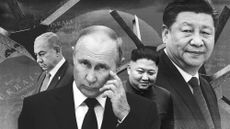
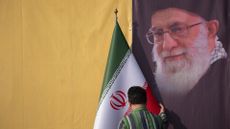
TODAY'S news that yet another nuclear scientist has been assassinated in Iran can only underline the growing sensation that the Islamic republic is heading for a major collision with the US and its European and Arab allies by the end of this month.

The regime in Tehran will be keen to point the finger at Israel, or the CIA, or their proxies, for the killing of Mostafa Ahmadi-Roshan, who, according to the Fars news agency, supervised a department at the Natanz uranium enrichment facility. Witnesses say he died this morning when a motorcyclist stuck a magnetic bomb on the side of his Peugeot 406 in Tehran.

Strategy wonks like to blur the boundaries of definition between confrontation and outright conflict. But there is no denying that America, Britain and Saudi Arabia are engaged in a serious confrontation with Iran. And if it spills into an exchange of fire, Tehran will be desperate to pin the blame on the West and Israel for starting it all in the first place.

Even before today's assassination, the propaganda machine of President Ahmadinejad, his protectors in the Supreme Council of Guidance and allies in the Revolutionary Guard, have been ratcheting up the talk of war and provocation – and on a daily basis.
 
First we had the announcement that the battle group of the aircraft carrier USS John C Stennis will not be allowed to pass north through the Straits of Hormuz to the US 5th Fleet base in Bahrain.
 
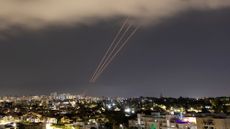
Furthermore the Iranian forces are to hold another major exercise in the straits at the end of the month, having completed one such set of manoeuvres only last week. These included the firing of a new anti-ship sea-skimmer missile and a new medium-range cruise missile.
 
The announcement was followed a day later by the claim from the Iranian naval command that they could close the strategic waterway – through which a large slice of the world supply of crude oil and liquid petroleum gas passes each day – at will. The US Navy has admitted that the Iranians, with their flotillas of ‘swarm' attack boats, could indeed close the Straits of Hormuz – but for a maximum of 36 hours only.
 
Then we have the Ayatollahs' spin machine announcing that Iran is enriching uranium to 20 per cent purity – the requirement for weapons grade material – at a new facility carved out of the mountain at the Fodor base, north of the holy city of Qom. This, they imply, would be invulnerable to even the most sophisticated deep-penetration bombs in the current American and Israeli arsenals.
 
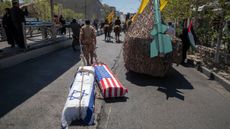
This news has been followed by the announcement that Amir Mirzaei Hekmati, an American citizen and former US Marine with dual Iranian citizenship, is to be hanged after being convicted of spying for the CIA.
 
By next week, the Royal Navy's newest destroyer, the 7,500-tonne Type 45 HMS Daring will be on her first operation – patrolling the Gulf. Her suite of radar and anti-missile defences is about the most sophisticated and powerful of any ship in the western world, and particularly suited to tracking multiple targets such as incoming short-range missiles and swarms of light attack patrol craft from the Iranian shore. The Navy also has mine-hunters standing by – no strangers to clearing Iranian ordnance in the Gulf.
 
In the meantime, Israel has leaked plans to The Times that it is preparing for Iran to announce that it has a nuclear weapon some time later this year.
 
And yet... the drums of war were interrupted this weekend by both the US defence secretary Leon Panetta and his armed forces chief General Martin Dempsey. Both men said Iran was a worry, but that force should be avoided at all costs – though the military option shouldn't be taken off the table altogether. Significantly, they said they doubted that Iran could make a viable operable nuclear weapon soon – the Iranians didn't have the resources or the money to do so.
 
As always with Iran and the Gulf, it's important to ignore the Tehran propaganda in order to see what is really going on. Iran and Saudi Arabia are locked in a deadly fight between their proxies, Shia and Sunni, from Iraq through the Gulf to Yemen, North Africa, Syria and Lebanon.
 
And sanctions do appear to be taking their toll. Iran's currency – the rial - fell to record levels against the dollar this week, and the Iranians have reportedly taken to storing stocks of oil in tankers stationed below the Straits of Hormuz, clearly worried by the EU threat to outlaw imports of Iranian oil and gas at the end of January.
 
And there's another pressing issue for the Tehran regime. Parliamentary elections are due in March – the first general election since the presidential vote was hijacked to give Ahmadinejad a second term in July 2009. The protests against that, broadcast worldwide via social media, have not fully gone away; they've just gone underground. The authorities are evidently trying to prevent a repeat performance by trying to unite the country in the face of war.
 
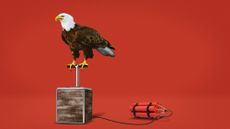
There is more posturing and manoeuvre to come, but it need not, and should not come to blows. Two recent heads of Mossad, the Israeli intelligence agency, have counseled strongly against the use of force. So far, Washington seems intent on confrontation and not outright conflict. But in those narrow waters, the line between rhetoric and action is too easily crossed. ·